Case Study
Temporary Bulk Water Storage for Service Reservoir Maintenance
Chalk Downland Site | Constrained Access | Concrete-Free Delivery
The Challenge
A UK water company operated a 3.5ML single-cell concrete service reservoir on a steeply sloping chalk downland site approaching mandatory inspection.
The reservoir could not be taken offline without equivalent temporary storage at a compatible hydraulic level. The site also presented severe access and geotechnical constraints — including unstable fractured chalk and restricted access unsuitable for conventional heavy construction approaches.
The asset team needed a solution they could deploy in weeks, not months — and one that would not consume the capital budget earmarked for the wider AMP cycle.
The Alternative Considered
The original approach involved a temporary GRP tank on reinforced concrete foundations requiring:
• Significant hillside re-engineering
• Deep piling through fractured chalk
• Reinforced concrete raft foundations
• Major access upgrades for heavy plant and concrete deliveries
Construction alone was estimated at approximately 18 months, carrying substantial programme overrun risk and a capital cost commensurate with permanent civil works of that scale. The proposed infrastructure would also have remained as a long-term legacy asset on a sensitive chalk downland site, well beyond the period of operational need.
The Butek Portstoken Solution
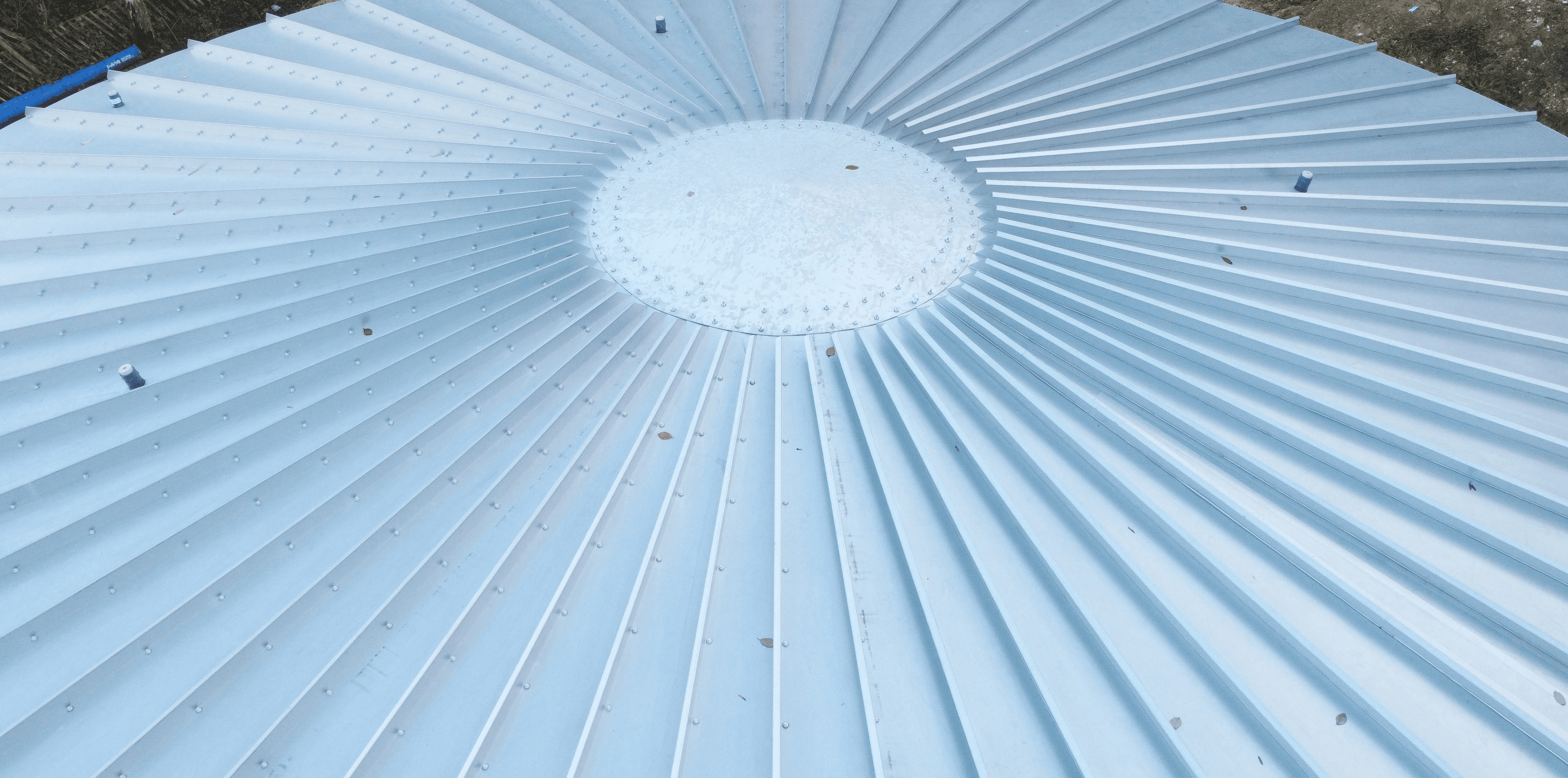
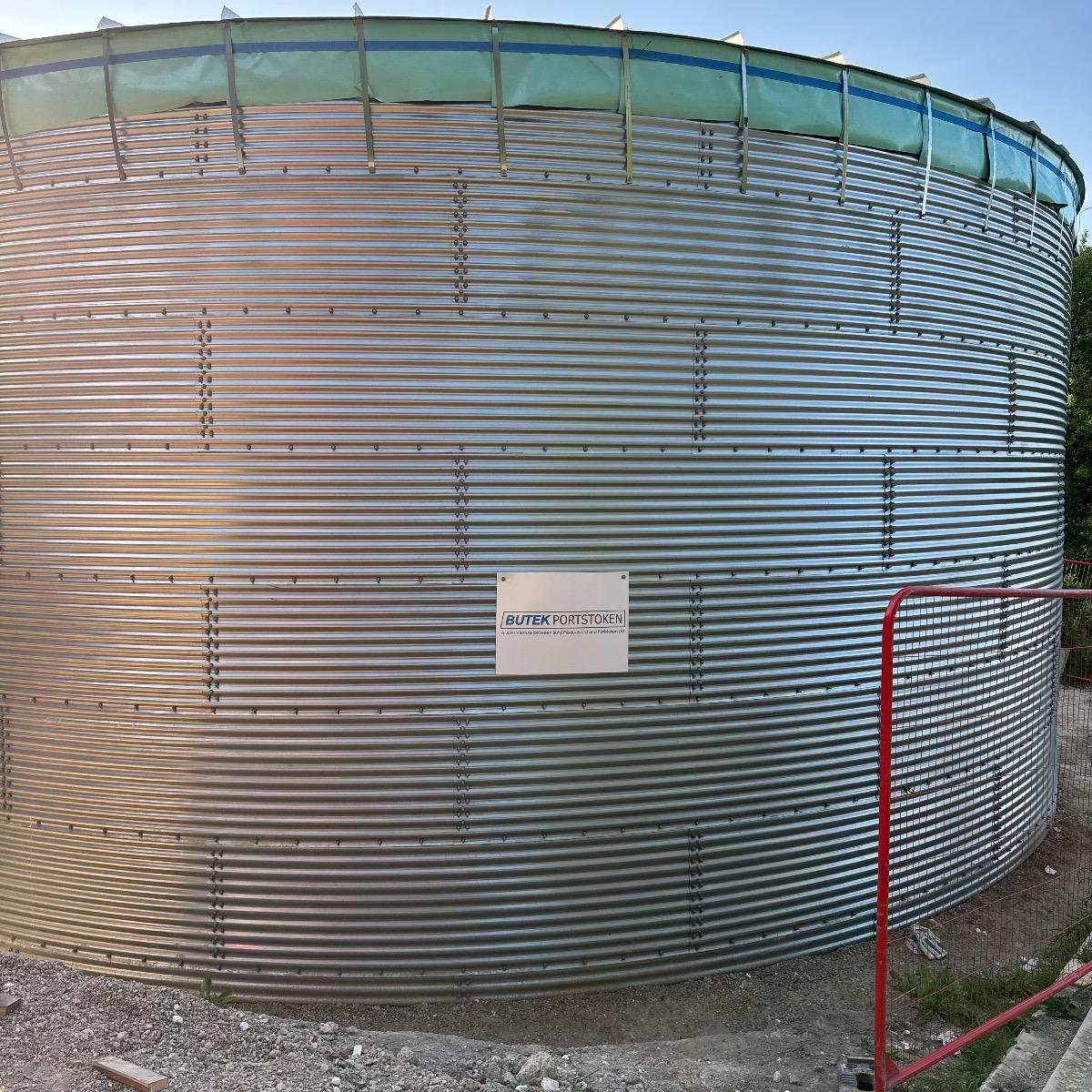
Butek Portstoken delivered a 650,000-litre Regulation 31 compliant temporary storage system on a fully recoverable rental basis — mobilised and brought into service within weeks of instruction.
The tank was founded on a self-anchoring ground ring, eliminating the need for piling, poured concrete, and major excavation while maintaining hydraulic compatibility with the permanent reservoir.
The installation remains in service today, supporting the water company's ongoing maintenance programme.
Commercial Outcome
The commercial difference between the two approaches was decisive.
• Total cost of the Butek Portstoken solution: a fraction of the reinforced-concrete alternative
• Charged against operational and maintenance budgets — not capital programme spend
• No lengthy capital asset approval cycle required to release funds
• Asset ownership and deployment risk retained by Butek Portstoken throughout
• No stranded asset at end of operational need — equipment recovered and redeployed
For the asset team, this converted a multi-million-pound capital construction project into a flexible operational rental — releasing capital headroom for core network investment elsewhere in the AMP programme.
Programme Outcome
• Mobilised and commissioned within weeks of instruction
• Compared with an 18-month construction programme for the original alternative
• Mandatory reservoir inspection enabled without compromising network resilience
• No piling, concrete, or heavy construction works required
• No access upgrades required despite severe site constraints
• Full removal scoped into the original contract for activation at end of operational need
Site & Carbon Impact
Compared with the reinforced concrete alternative, the Butek Portstoken solution avoided deep piling works, reinforced concrete foundations, large-scale excavation and spoil removal, heavy access reconstruction, and long-term permanent alteration of a sensitive chalk downland site.
Because the infrastructure remains part of a reusable operational fleet, the embodied carbon associated with its manufacture will be distributed across repeated future deployments rather than attributed to a single permanent asset build.
Permanent infrastructure cost. Permanent infrastructure programme. Permanent legacy on a sensitive site. None of it necessary. Butek-Portstoken delivered the same operational outcome at a fraction of the cost, in weeks rather than months, on opex rather than capex — and with no civil works legacy when the reservoir returns to service.