How We Work
Temporary potable water infrastructure is not simply permanent infrastructure on a shorter timescale. It carries its own regulatory requirements, operational risks, and site-specific considerations — and it demands a supplier who understands all of them.
Butek Portstoken was established specifically for the water sector. Our approach is built around three principles:
• Compliance from the outset
• Risk managed proportionately
• Full accountability throughout
Regulatory Compliance
Every Butek Portstoken installation is designed, specified, and commissioned to meet Regulation 31 requirements. This applies to water-contact materials, liner systems, disinfection procedures, and operational management throughout the project lifecycle.
All installations are managed under CDM 2015, with full Construction Phase Plan documentation, method statements, and quality assurance from mobilisation through to site reinstatement. We act as CDM principal contractor or sub-contractor to the appointed PC, according to the client's project structure.
We understand the Drinking Water Inspectorate's requirements and work within them as a matter of course.
Security — Designed In, Not Added On
A temporary storage asset must meet the same security obligations as the permanent infrastructure it replaces. Unlike permanent reservoirs, temporary installations do not benefit from inherent structural security — which means security must be actively designed into every deployment.
The DWI requires that a temporary installation does not compromise the security of the potable water supply it supports. This is not a box-ticking exercise — it is a substantive design requirement that shapes how we specify, install, and operate every asset on site.
All Butek Portstoken installations are subject to a site-specific Security Risk Assessment, considering not only the tank itself but associated pipework, temporary connections, and exposed infrastructure. Our approach aligns with Critical National Infrastructure (CNI) principles and is structured around three core objectives:
Deter
Discourage unauthorised access through visible and effective physical measures.
Detect
Ensure any attempted access or interference is quickly identified.
Delay
Physically slow intrusion to allow time for response.
Security is delivered through a combination of:
• Controlled and restricted access to all tank entry points
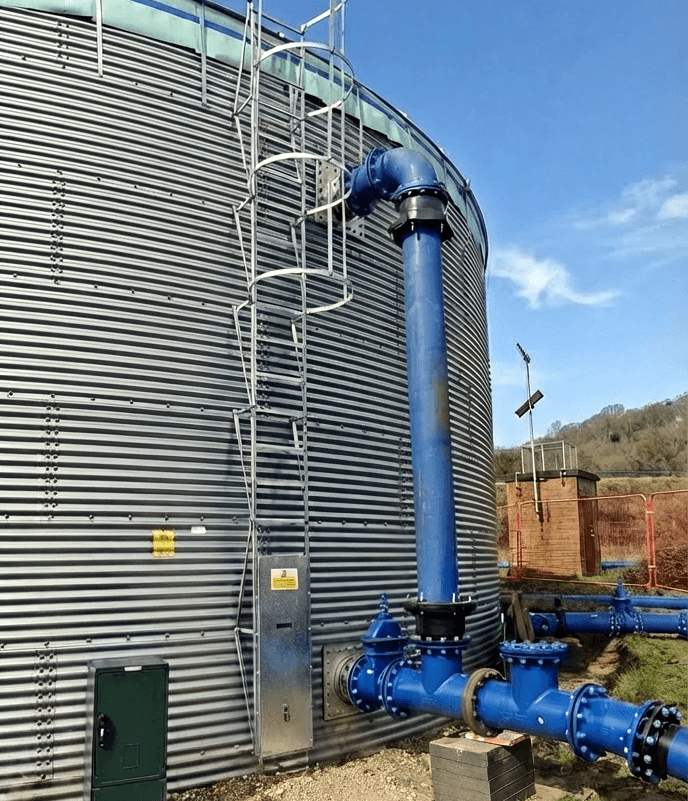
• Physical protection of hatches, ladders, and pipework
• Appropriate perimeter measures based on site risk
• Monitoring solutions such as CCTV or remote visibility where required
• Defined operational procedures and access controls
Security is always proportionate to risk and designed in accordance with the ALARP principle — ensuring the right level of protection without unnecessary complexity. Standard temporary fencing alone is not sufficient. We maintain clear procedures to manage incidents, isolate assets if required, and ensure continuity of supply is preserved.
Planning & Consents
Temporary water infrastructure is still subject to planning controls. Under the Town and Country Planning Act 1990, installations such as storage tanks, pipework, and associated equipment may constitute development — even where deployed for short-term purposes.
Where applicable, schemes may fall within permitted development rights available to statutory undertakers under the Town and Country Planning (General Permitted Development) (England) Order 2015. Whether this applies depends on site-specific factors including scale, location, and duration.
Our approach is pragmatic and risk-led:
• We assess planning requirements at an early stage of every project
• We engage with local planning authorities where needed
• We support or manage planning and prior approval applications as required
By designing systems that are temporary, reversible, and low-impact — including our concrete-free installation approach — we minimise planning risk and simplify approvals wherever possible.
The Rental Model — Operational, Commercial & Environmental Advantages
Our model is built around a reusable operational infrastructure fleet. Equipment is owned, maintained, deployed, recovered, and redeployed by Butek Portstoken throughout its operational life. This structure carries significant advantages for water companies.
Commercial and operational:
• Rental costs are aligned to maintenance and operational budgets rather than permanent capital asset creation — removing lengthy asset planning approval cycles
• Asset ownership and deployment risk are retained by Butek Portstoken throughout — not the water company
• No stranded assets at project end — equipment is recovered and redeployed
• Rapid commercial decision-making — reducing the time from project identification to mobilisation from months or years to weeks
• Future deployment acceleration through pre-enabled sites and retained enabling infrastructure
Environmental:
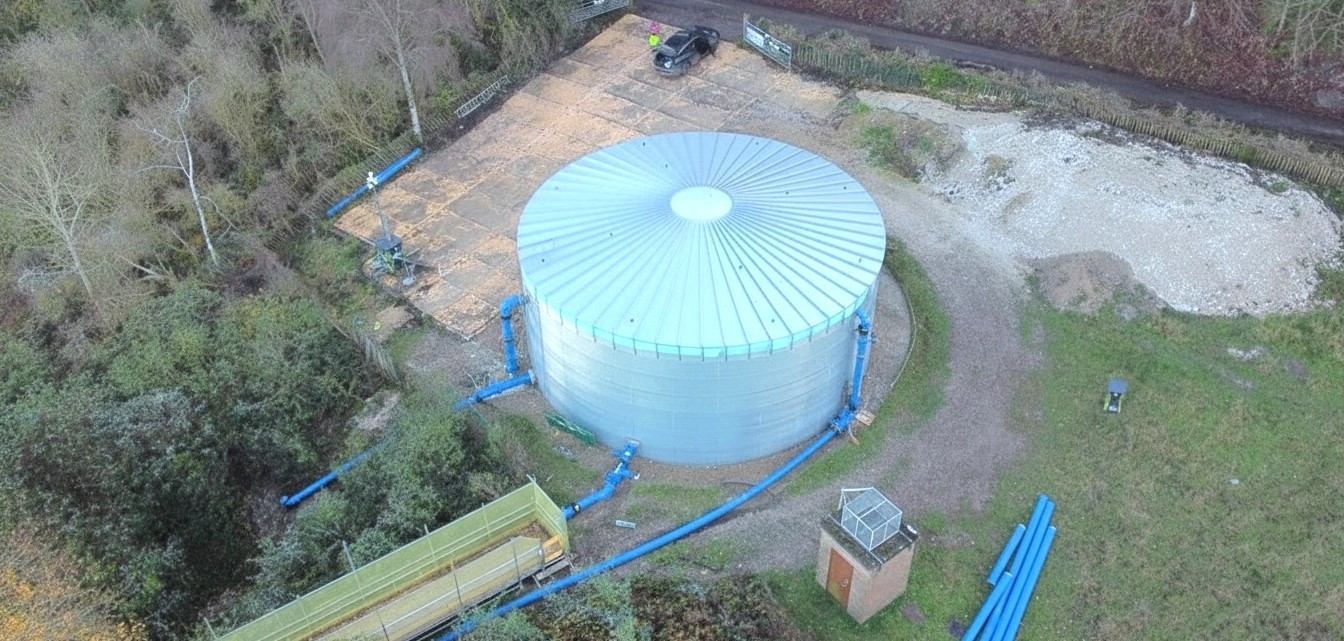
• Every tank deployment avoids a concrete build, reducing embodied carbon at the point of installation
• Reduced excavation and heavy plant requirements
• Embodied carbon distributed across many deployments through fleet reuse — customers carry carbon only during the hire period
• All materials fully recyclable and fully recovered at decommissioning
• Minimal permanent impact on sensitive operational or rural sites
AMP8 alignment: Butek Portstoken's rental model converts capital expenditure into flexible operational spend, enabling water companies to respond quickly to asset management needs without committing to permanent infrastructure or long planning cycles — directly supporting the priorities of the Cunliffe Report.
Rapid Mobilisation for Short-Notice Programmes
Planned maintenance windows have lead times. Operational storage shortfalls and emergency resilience requirements often do not. Our fleet and operational capacity are maintained to support both.
Talk to us at the earliest stage of your programme — including at ROM estimate stage — to understand what is achievable within your timescales.